

How Everything Starts With Someone Who Shows Up First
By Kevin Curley II, CFP®, CEPA® | Senior Wealth Advisor, Clearfront Advisory
Every great thing starts somewhere small.
Not with a championship. Not with a banner or a sellout crowd or a recruit ranked in the top ten nationally. It starts with someone deciding that something is worth building — and then showing up, day after day, long before anyone is paying attention.
For Villanova basketball, that person was Al Severance.
The Man Who Built the House
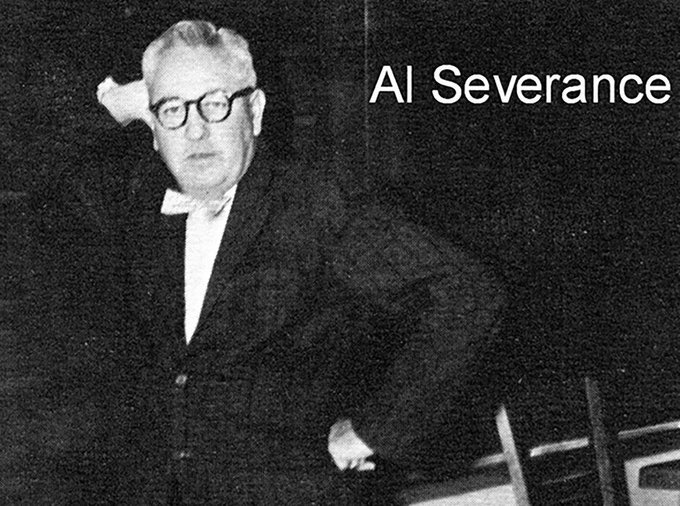
Before Jay Wright. Before Rollie Massimino. Before the Perfect Game and the Perfect Ending and the buzzer beaters that stopped the world — there was a former Villanova player named Al Severance who took over the program in 1936 and spent the next 25 years laying a foundation that every era since has stood on.
He was not a famous coach. He did not win a national championship. He did not have his name in the headlines the way his successors would. What he did was quieter and, in many ways, harder. He built the culture from scratch. He established what it meant to be a Villanova basketball player — the standards, the identity, the expectation that the program would compete at the highest level year after year.
In his 25 seasons, Severance won 413 games and lost 201. A winning percentage of .673 sustained across a quarter century. He took the program to its first Final Four in 1939 — a fact that tends to get lost in the glow of later eras — and he did it before the tournament was the cultural institution it is today. He built relationships with his players that lasted lifetimes. He created a community around the program that people wanted to be part of and stay connected to long after their playing days ended.
Jay Wright, who would go on to win two national championships at Villanova, understood exactly what Severance had done. Wright described the tradition he inherited not as something he created but as something that was already there, waiting — a set of values and standards passed down through generations of players and coaches that predated him by decades. That lineage runs directly through Al Severance.
Here is the detail about Severance that stops me every time I think about this program’s history.
He died on the morning of April 1, 1985. The day of the Perfect Game. The day Villanova shot 78.6% from the field against Patrick Ewing and Georgetown and won the national championship as an eight seed in one of the most stunning upsets in the history of American sport.
He never saw it. The thing he spent 25 years building produced its most extraordinary moment on the day he left. Whether you read that as tragedy or as the most poetic possible ending to a life’s work probably says something about you. I read it as both. And I think about what it means to build something with no guarantee you will ever see it reach its peak.
The Kid Who Got Cut
While Severance was building the program, a young man from Philadelphia named Paul Arizin was being told he wasn’t good enough.
Arizin was cut from his high school basketball team. Not benched. Not buried on the depth chart. Cut. Told to go home.
He didn’t quit. He kept playing — pickup games, local leagues, anywhere he could find a game. He got better. He got a lot better. And when he enrolled at Villanova as a student, he was still just a kid playing pickup basketball in the gym with no scholarship, no recruiting visit, no plan beyond showing up and playing.
Al Severance found him there.
That is the whole story, in one sentence. The coach who built the program, walking through his own fieldhouse, watching a kid nobody had recruited and recognizing something worth developing. Severance offered Arizin a spot on the team.
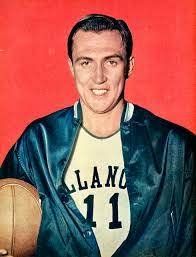
What followed was one of the most decorated careers in the history of college basketball. Paul Arizin became the 1950 College Player of the Year — named by The Sporting News after leading the nation with 25.3 points per game. He set a Villanova record that still stands today — 85 points in a single game. He was named an All-American. He left Villanova and went on to a Hall of Fame NBA career with the Philadelphia Warriors, winning two scoring titles and an NBA championship in 1956. In the final years of his career he shared the floor with a young Wilt Chamberlain — a two-time scoring champion playing alongside the player who would become the most dominant force in NBA history.
He is also credited, alongside a handful of others, with helping to popularize the jump shot — a fundamental innovation in the way the game is played that changed basketball forever.
Jay Wright, who had the privilege of knowing Arizin later in life, called him the most dignified, classy, and humble legend he ever met. Not the most talented. Not the most decorated. The most dignified. That word choice tells you everything about the culture Severance built and the kind of person it produced.
What They Built Together
Severance and Arizin were coach and player for four years. But what they built together was bigger than either of them.
Severance gave Arizin the structure — the coaching, the environment, the belief that his talent was worth developing. Arizin gave the program something equally valuable in return — proof. Proof that Villanova could attract and develop a player of that caliber. Proof that the program was worth taking seriously. Proof that what Severance was building had real substance underneath it.
Every great program needs both things. The coach who creates the environment and the player who validates it. One without the other produces neither culture nor legacy. Together, they create something that outlasts both of them.
When Severance retired in 1961, he handed a program to Jack Kraft that was already something. When Kraft handed it to Rollie Massimino, it was something more. When Massimino’s era produced that perfect April afternoon in 1985, Severance was gone — but the house he built was still standing. It was always going to be standing.
The Part That Applies to You
I work with business owners and high-achieving families. People who are building something — a company, a financial life, a legacy for the next generation. And the single most common thing I see is the hardest thing to teach:
Everything starts smaller than you think it should.
The foundation feels unglamorous. The early years feel invisible. You are putting in work that no one is watching yet, toward a result you cannot guarantee you will ever see. There are setbacks — moments where you feel like Paul Arizin getting cut from the team, wondering if the whole thing was a mistake.
What Severance and Arizin understood, even if they never articulated it this way, is that the work of building is not separate from the result. It is the result. The 25 years of showing up, the pickup game that nobody was supposed to notice, the standards maintained in seasons nobody remembered — that is the championship. Everything else is just the moment it became visible.
Starting is the hardest part. Starting with less than you want, in conditions that aren’t ideal, without the full picture of where it goes. But the programs and the portfolios and the businesses that compound over decades are almost always the ones where someone started anyway. Where someone showed up, built the foundation, and trusted the process long before anyone had a reason to.
Al Severance never saw the Perfect Game.
He built the program that made it possible.
Coach’s Clipboard — Chapter 1
The Drill: Build Your Foundation First
Before the championships, before the growth, before anything compounds — there is a foundation. For Villanova it was 25 years of culture-building. For your financial life it is simpler than that, but just as non-negotiable.
Three foundational moves that everything else is built on:
Start — even if the amount feels small. The pickup game matters. Time in the market compounds in ways that waiting never will.
Build your emergency fund — three to six months of expenses set aside before you invest aggressively. This is your bench. The seasons where things go wrong are the ones that test whether you built the foundation or skipped it.
Find your coach — accountability and technique are not weaknesses. They are the reason Arizin went from getting cut to College Player of the Year. The right advisor relationship does not just manage money. It develops the discipline and the plan that makes the money mean something.
The foundation is not the exciting part. It is the only part that matters.
Sources
- Alexander Severance biography and coaching record: Wikipedia | Villanova University
- Paul Arizin career profile: NBA.com | Wikipedia
- Arizin College Player of the Year and scoring record: Villanova University
- Severance death on April 1, 1985: Wikipedia
- Jay Wright quote on Arizin: Villanova University
This post was researched and written by the author with the assistance of AI writing tools. All content reflects the author’s own views, has been independently verified, and has been reviewed and approved prior to publication.