

On Inherited Foundations, Improbable Runs, and the Cost of One Hidden Decision

By Kevin Curley II, CFP®, CEPA® | Senior Wealth Advisor, Clearfront Advisory
In 1961, a coach named Jack Kraft walked into a program that Al Severance had spent 25 years building and asked himself a simple question: what do I do with this?
It is one of the oldest and most underappreciated challenges in sports — and in business. You did not build the foundation. Someone handed it to you. It has real value, real history, real expectations attached to it. The question is whether you can honor what came before while making it your own.
Kraft answered that question as well as anyone in the history of Villanova basketball.
The Architect’s Successor
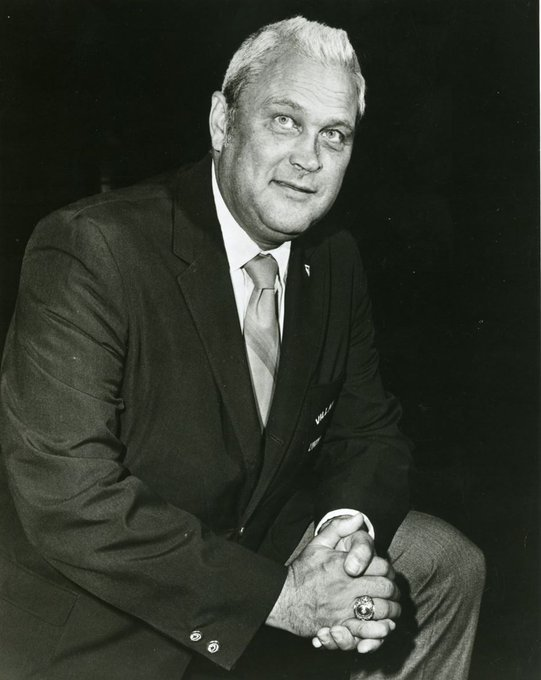
Jack Kraft came to Villanova from Malvern Prep, a small Catholic school on the Main Line where he had built a reputation as a disciplined, detail-oriented coach who got the most out of his players. He was not a flashy hire. He was not a national name. He was a craftsman — the kind of coach who wins not by outtalenting the opponent but by outpreparing them.
In 12 seasons at Villanova, Kraft compiled a record of 238 wins and 95 losses. A winning percentage of .715 — the highest of any men’s basketball coach in the history of the program, including Jay Wright. He took the Wildcats to the postseason eleven times. Six NCAA Tournament appearances. Five NIT bids. Seven seasons with twenty or more wins in an era when a regular season rarely exceeded thirty games.
Jay Wright, who would go on to build the greatest era in the program’s history, once said he idolized Kraft as a child. He attended Kraft’s basketball camp as a ten-year-old and used to walk past his house on the Jersey Shore in the summer hoping to catch a glimpse of him. When Wright became head coach at Villanova decades later, Kraft was one of his most consistent sources of support and counsel.
That is what a well-built program does. It creates a lineage. Each coach who comes through leaves something for the next one to build on.
The Iron Men
In the 1970-71 season, Kraft’s Villanova team did something that no Wildcat squad had done since 1939. They reached the Final Four.
The team was known informally as the Iron Men — a reflection of their limited roster and the relentless way they played. There was no depth to hide behind, no luxury of rotation. The players who started were the players who finished, and they played accordingly. Every game was a full commitment from a small group of men who trusted each other completely.
Inside the Houston Astrodome, the Iron Men beat Western Kentucky in double overtime to reach the national championship game. It was a war. A game that required everything they had just to survive.
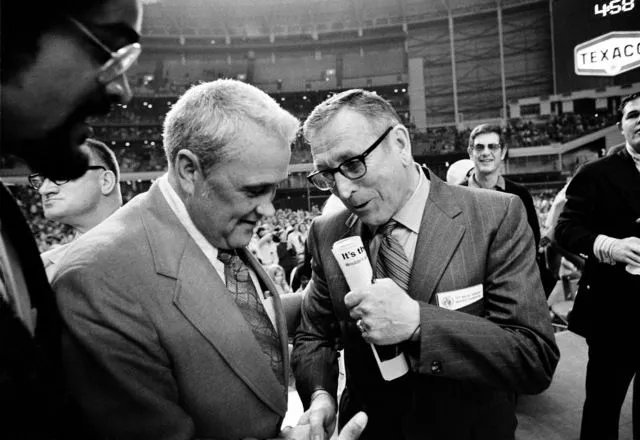
In the final they faced UCLA. This was not a normal UCLA team. John Wooden’s Bruins were in the middle of one of the most dominant dynasties in the history of American sport, on their way to seven consecutive national championships. No team had come particularly close to beating them.
Villanova came close.
The final score was 68-62. The Wildcats pushed the greatest program of that era to the wire and lost by six points. It remains one of the most competitive championship games of the Wooden dynasty.
The man at the center of it all was Howard Porter.
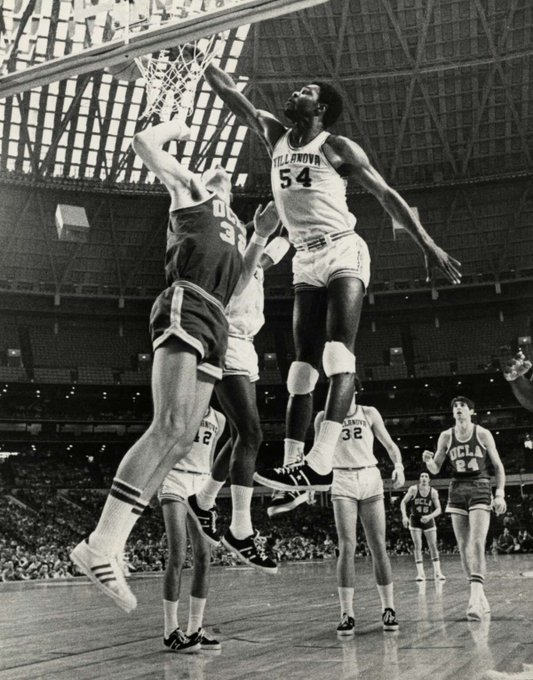
Howard Porter
Porter came to Villanova from Sarasota, Florida. He was 6-foot-8 with a combination of size, skill, and athleticism that was genuinely rare for his era. In three seasons with the Wildcats he averaged 22.8 points and 14.8 rebounds per game across 89 career games. He was named an All-American three times. He was the kind of player who made everyone around him better — the kind of player programs are built around.
In the 1971 tournament run, Porter was the best player on the floor in almost every game Villanova played. In the championship game against UCLA — against a team that had Kareem Abdul-Jabbar the year before and would have Bill Walton the year after — Porter scored 25 points and was named the tournament’s Most Outstanding Player.
It should have been one of the great individual honors in the history of the program.
It was vacated.
The Hidden Decision
Sometime during his senior season, Howard Porter had signed a contract with the Pittsburgh Condors of the American Basketball Association. He had not disclosed it. The NCAA, upon discovering it after the tournament, ruled him retroactively ineligible. Villanova’s entire 1971 tournament record was vacated. The Final Four appearance, the runner-up finish, Porter’s Most Outstanding Player award — all of it removed from the official record books.
The program did not cease to exist. Kraft kept coaching. The players who had been on that team carried what they had accomplished in their own memories even if the record books no longer reflected it. The foundation Severance had built and Kraft had extended was still standing.
But one undisclosed decision — made in private, consequences not yet visible — had erased the most significant achievement the program had produced in more than thirty years.
The Rest of the Story
Howard Porter was selected in the first round of the 1971 NBA Draft by the Chicago Bulls. He played seven seasons as a professional. He was talented enough to last in the league, though never quite the dominant force his college career had suggested he might become.
After basketball he struggled. A battle with cocaine addiction took years from his life and took him far from the player and person he had been at Villanova. By his own account it was one of the lowest periods imaginable.
But Porter’s story did not end there.
He came to Minnesota for treatment. He rebuilt his life. He married. He found his faith. He became a probation officer for Ramsey County, spending his days helping other people navigate their own struggles with the system and with themselves. Former teammates who reconnected with him in his later years spoke about a man who had been through extraordinary difficulty and come through it with real peace. He talked openly about what his faith had meant during the hard years. He talked about how much Villanova still meant to him.
In May 2007, Howard Porter was found severely beaten in a Minneapolis alley. He died of his injuries on May 26, 2007. He was 58 years old. A man was subsequently convicted of his murder.
Jay Wright, upon learning of his death, said: “Howard was a kind, gentle, and humble man who loved his family and Villanova. We will all miss him.”
He is still missed.
What Kraft and Porter Teach Us
Jack Kraft inherited a foundation and built something greater on top of it. He did it with discipline, with preparation, and with the kind of sustained excellence that does not happen by accident. His .715 winning percentage is not the result of one great team or one remarkable season. It is the result of twelve years of showing up and doing the work the right way.
Howard Porter’s story is more complicated, and more human. It is the story of extraordinary talent, a moment of poor judgment, a long fall, and a genuine redemption. The vacated title is a real loss — but it is not the whole story. The whole story includes the man he became after basketball, the lives he touched as a probation officer, and the dignity with which he rebuilt everything he had damaged.
I think about both of them often when I sit across the table from a business owner who has built something real and is trying to figure out what comes next. The Kraft lesson is about sustained process — the .715 that nobody talks about because it lacks the drama of a single great moment. The Porter lesson is about disclosure — about the hidden decisions that seem manageable in the moment and become defining in ways you never anticipated.
Both lessons matter. Neither one is comfortable to sit with.
Coach’s Clipboard — Chapter 2
The Drill: Audit the Hidden Decisions
Every financial life has a version of the undisclosed contract. Something deferred, something not yet addressed, something that exists in the background of an otherwise solid plan.
It might be an estate plan that was drafted fifteen years ago and never updated. A business buy-sell agreement that no longer reflects the current value of the company. A life insurance policy that made sense when the kids were young and hasn’t been reviewed since. A tax strategy built around assumptions that have changed.
None of these feel urgent on any given day. That is exactly why they accumulate.
The drill is simple: make a list of the financial decisions you have been deferring. Not the ones you haven’t gotten to yet. The ones you know about and have been leaving undisturbed because the moment hasn’t forced your hand.
Jack Kraft’s .715 is built one game at a time. The hidden decisions are how you lose what you spent decades building.
Sources
- Jack Kraft coaching record and career: Wikipedia | VU Hoops
- Jack Kraft .715 winning percentage, highest in Villanova history: Philadelphia Inquirer
- Jay Wright quote on Kraft: VU Hoops
- Howard Porter career stats and biography: Wikipedia
- Howard Porter death May 2007: Villanova University | Philadelphia Inquirer
- Murder conviction: ESPN
- 1971 NCAA Tournament vacated: Wikipedia
This post was researched and written by the author with the assistance of AI writing tools. All content reflects the author’s own views, has been independently verified, and has been reviewed and approved prior to publication.