On Preparation, Process, and What Happens When Everything Is on the Line
By Kevin Curley II, CFP®, CEPA® | Senior Wealth Advisor, Clearfront Advisory
April 1, 1985. Rupp Arena. Lexington, Kentucky.
April Fools Day.
The newspaper that morning carried a column predicting that there would be a Martian in the White House before Villanova beat Georgetown for the national championship. The writer was not trying to be clever. He was stating what every serious observer of college basketball believed to be true.
Villanova had entered the tournament at 19-10. They were an eight seed. They had lost to Georgetown twice during the regular season. Georgetown was the defending national champion, ranked number one, led by Patrick Ewing — one of the most dominant players in the history of college basketball — and favored by nine points.
Nobody outside of Villanova’s locker room thought they had a chance.
They were right about almost everything.
Almost.
The Coach Who Built the Culture
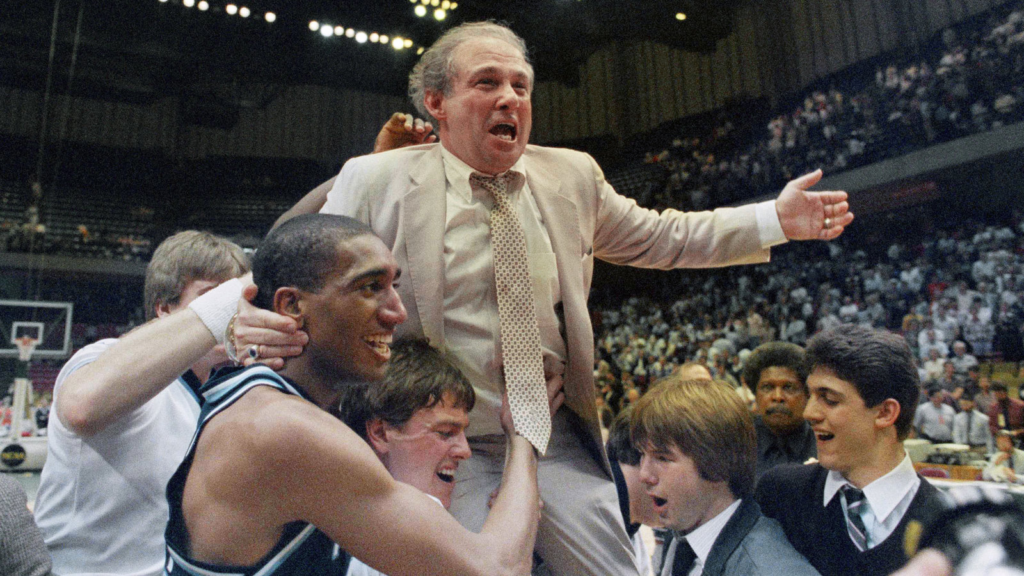
Rollie Massimino arrived at Villanova in 1973 as the successor to Jack Kraft and spent the next nineteen seasons building on everything that Severance and Kraft had laid before him. He was loud, emotional, relentless, and deeply personal in the way he coached. He knew his players. He knew their families. He showed up at their homes. He recruited not just talent but character — people who could execute under pressure because they had been prepared to execute under pressure, over and over, long before the games that mattered.
His record at Villanova was 357 wins and 241 losses. He took the program to the NCAA Tournament eleven times. His teams reached the Elite Eight five times in an eleven-year span. He never lost a first-round game to a lower-seeded opponent. Not once in nineteen seasons.
What Massimino understood — and what defined his entire coaching philosophy — was that preparation was not a substitute for talent. It was a multiplier of it. A prepared team with good players would consistently outperform an unprepared team with great ones. The 1985 Villanova Wildcats were not the most talented team in the country. They were the most prepared.
The Gauntlet He Ran
Before we get to April 1st, it is worth understanding what Massimino navigated in the nineteen seasons that surrounded it.
When he arrived in 1973, Villanova was still an independent program — playing without a conference home, scheduling opponents on their own terms, building a reputation game by game. In 1975 the Wildcats joined the Eastern Eight Conference, and in 1980 they moved into the newly formed Big East alongside Georgetown, St. John’s, and Syracuse. That decision changed everything. The Big East of the 1980s was not just a conference — it was the center of gravity for college basketball in America. The best players, the best coaches, the most intense rivalries, the most pressure. Every year in the Big East was a graduate education in playing under the highest stakes.
Massimino thrived in it. And along the way his teams faced some of the most dominant players in the history of the sport.
In 1983, Villanova went into the NCAA Tournament as a three seed and ran into a Houston team led by Hakeem Olajuwon and Clyde Drexler — Phi Slamma Jamma at the peak of their powers — and lost in the Elite Eight. In 1985, Villanova opened the season by playing at a Maryland team led by Len Bias — the player many scouts considered the best in the country before his tragic death the following year — and lost. That loss started a mid-season slump nobody outside the program thought they would recover from. In 1990, Villanova lost their first-round NCAA Tournament game to an LSU team with a freshman named Shaquille O’Neal — the only first-round exit of Massimino’s entire tenure. And throughout the decade, Georgetown and Patrick Ewing stood as the conference’s defining obstacle, the program Villanova measured itself against more than any other.
This is the path. Not a straight line to the championship but a nineteen-year education in competing against greatness, absorbing losses to generational players, and coming back the following season better prepared than before. Every Elite Eight run that fell short. Every regular season loss to a team that had no business losing. Every year of showing up in the toughest conference in college basketball and doing the work.
The 1985 championship did not come from nowhere. It came from all of that.
The Morning of April 1st
Before the championship game, Villanova’s program lost one of its most important figures.
Al Severance — the coach who had built the foundation of the program forty-nine years earlier, the man who had discovered Paul Arizin in the fieldhouse and set the standard that every Villanova era since had tried to meet — died that morning in his hotel room in Lexington. He had come to watch the game. He never got there.
Rollie Massimino was close to Severance. The news hit him hard. He was distraught. His team was about to play for a national championship and the man who had made the program what it was had died hours before tip-off.
Massimino coached anyway. He had to. And what he did in those hours between the news and the opening buzzer says everything about what kind of coach — and what kind of man — he was.
He gathered his team for dinner. At the end of the meal, he told them to go back to their rooms, close their eyes, and visualize cutting the nets down.
Before the game he told them two things: anybody can beat anybody on any given night, and he wanted them to play to win — not to play not to lose. There is a difference between those two things that is larger than it sounds. One is about execution. The other is about fear. Massimino wanted no part of fear.
78.6%
What followed over the next forty minutes was, by any reasonable measure, the most perfectly executed game plan in the history of college basketball.
Villanova shot 22-of-28 from the field. A 78.6% shooting percentage in a national championship game against the best defense in the country. In the second half they missed exactly one shot — going 9-of-10 from the field while Georgetown threw everything they had at them.
Harold Jensen came off the bench and went 5-of-5 from the field, including the go-ahead jumper late in the game that proved to be the decisive basket. Dwayne McClain scored 17 points and played all 40 minutes. Ed Pinckney — the tournament’s Most Outstanding Player — finished with 16 points, 6 rebounds, and 5 assists, and spent the night neutralizing Patrick Ewing in a performance that defied everything the matchup suggested was possible.
Georgetown shot 55% from the field. On any other night against any other opponent, 55% shooting wins the championship comfortably. Against Villanova on April 1st, 1985, it was not enough.
The final score was 66-64.
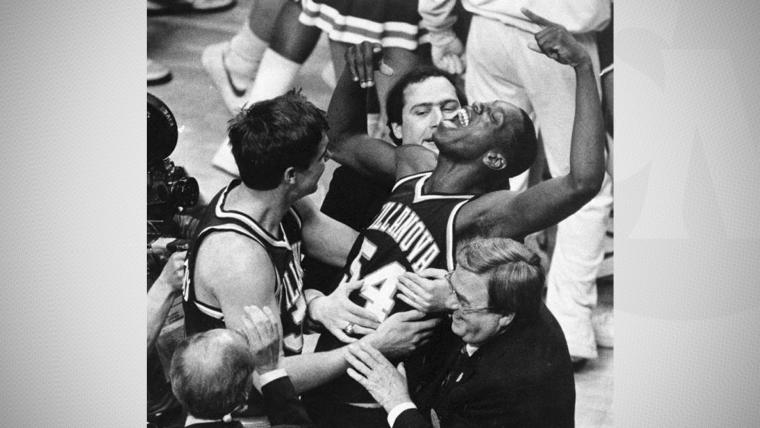
Ed Pinckney deserves more than a stat line. He arrived at Villanova as a McDonald’s All-American — one of the most coveted recruits in the country. He stayed all four years, developed under Massimino, and left as the tournament’s Most Outstanding Player and the 10th overall pick in the 1985 NBA Draft. His jersey hangs in the rafters at the Pavilion. And when Jay Wright took over the program in 2001 and began building what would become the next great Villanova era, one of the first people he called was Ed Pinckney. Pinckney served as an assistant coach under Wright from 2003 to 2007. Once a Wildcat, always a Wildcat — not as a slogan but as a lived reality that runs through every era of this program’s history.
It was the last national championship game ever played without a shot clock. Villanova used every second of every possession, patient and disciplined, never forcing a shot that wasn’t there, trusting the process even when Georgetown’s pressure defense created chaos around them. The ball moved. The right people took the right shots. The plan held.
Massimino ran onto the court in his soaking wet suit, arms raised, the most joyful image in the history of the program. Ed Pinckney accepted the Most Outstanding Player trophy. The nets came down exactly as the team had visualized the night before.
Al Severance, who had died that morning, had built the program that made the moment possible. Jack Kraft had elevated it. Rollie Massimino had taken it all the way to the top.
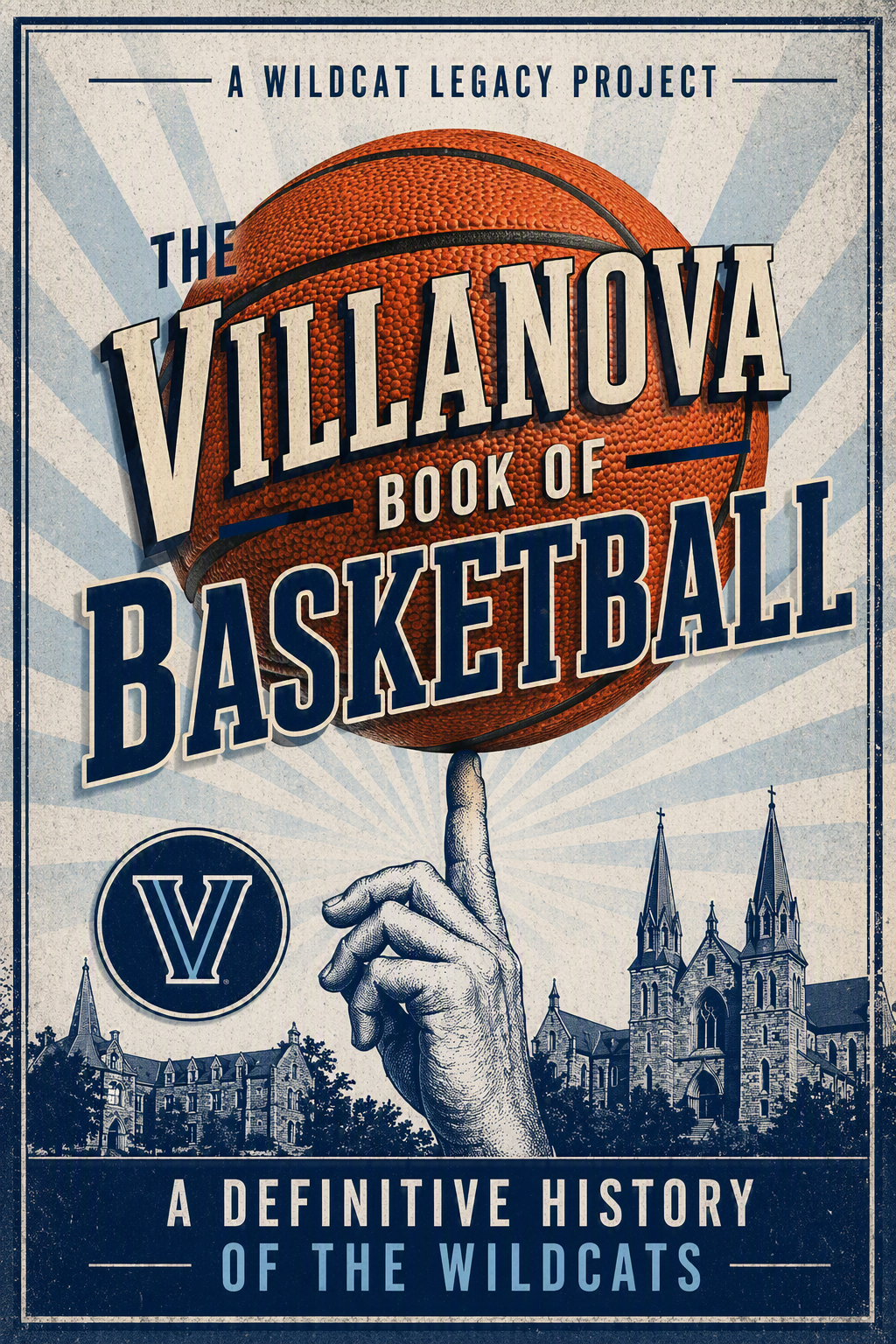
The Villanova Book of Basketball had its defining chapter.
What Made It Perfect
The shooting percentage gets cited most often when people talk about 1985. 78.6% is the number everyone remembers. But the shooting percentage was a result, not a cause. The cause was something less visible and less dramatic — the months of preparation that preceded those forty minutes.
Massimino ran his team through late-game scenarios constantly in practice. He prepared them for Georgetown’s pressure defense so thoroughly that when Gary McLain brought the ball across halfcourt against the most suffocating press in college basketball, his teammates exhaled rather than panicked. They had been there before. Not in a game. In practice. Over and over until the pressure felt familiar rather than terrifying.
This is what elite preparation actually looks like. Not inspiration. Not talent alone. The deliberate, repetitive, unglamorous work of simulating the hardest moments before they arrive so that when they do arrive, the response is trained rather than improvised.
Nick Saban would later call his version of this the Process. Jay Wright would call it the Wildcat Minute. Massimino called it playing a perfect game. The language is different. The principle is identical.
You do not rise to the occasion. You fall to the level of your preparation.
The Part That Applies to You
I have sat across from hundreds of business owners over the course of my career. The ones who navigate the hard moments best — the market downturns, the unexpected liquidity events, the estate crises, the succession decisions that arrive before anyone is ready — are almost never the ones who are the smartest in the room.
They are the ones who prepared before the moment arrived.
The business owner who has a buy-sell agreement that is current and funded. The family that has had the estate planning conversation before someone is sick. The investor who built a written financial plan in calm conditions and can point to it when markets are down 25% and every instinct says to sell. These people do not perform better under pressure because they are more talented. They perform better because they have already played the game in practice.
Massimino told his team to play to win, not to play not to lose. That distinction applies directly to how most people manage their financial lives. Playing not to lose means hoarding cash when inflation is eroding it. It means avoiding the estate conversation because it is uncomfortable. It means deferring the plan because the timing never feels right. It means standing on the beach, watching the sun go down, and ringing the bell before the night even arrives.
Playing to win means building the plan when conditions are good so it holds when conditions are not. It means doing the preparation that nobody sees — the practice reps, the scenario planning, the hard conversations in advance of the hard moments — so that when April 1st arrives, your team knows exactly what to do.
The 1985 Villanova Wildcats did not shoot 78.6% because they were lucky. They shot 78.6% because Rollie Massimino had spent months making sure they would know what to do when the lights were brightest.
That is the only kind of perfect game worth playing.
Coach’s Clipboard — Chapter 3
The Drill: Write the Game Plan Before You Need It
Massimino did not draw up the game plan for Georgetown on the morning of April 1st. It had been built over months. When the moment came, the plan was already there.
Your version of this is a written financial plan — not a product recommendation or an investment allocation, but a documented set of answers to the questions that will matter most when conditions get hard.
Three questions your plan should already answer:
If the market drops 30% from here, what is my specific response? Not “stay calm” — that is not a plan. What do you actually do? Do you rebalance? Do you add? Do you hold? Write it down now.
If I cannot work for twelve months, what happens to my business and my family? Do you have the right insurance, the right agreements, the right liquidity?
If I die or become incapacitated tomorrow, does my family know where everything is and what to do? Is the estate plan current?
These are not comfortable questions. They are the practice reps. The teams that do not run them in practice are the ones that improvise when the lights come on.
Build the game plan before you need it. That is the whole lesson.
Sources
- 1985 NCAA Championship game details and shooting stats: Wikipedia
- Massimino pregame instructions and halftime quotes: VU Hoops
- Villanova 19-10 record entering tournament, nine-point underdogs: History.com
- Ed Pinckney stats and Most Outstanding Player: 1985 NCAA Tournament Wikipedia
- Ed Pinckney NBA draft pick and assistant coach tenure: Villanova University
- Rollie Massimino career record 357-241: Wikipedia
- Severance death morning of April 1 1985: VU Hoops
This post is intended for educational and informational purposes only and does not constitute investment advice or a recommendation to purchase or sell any security or investment product. Private equity investments involve significant risk, including illiquidity and potential loss of principal. Past performance is not indicative of future results and there is no guarantee that any investment objective will be met. Investors should consult with a qualified financial advisor before making any investment decisions.
This post was researched and written by the author with the assistance of AI writing tools. All content reflects the author’s own views, has been independently verified, and has been reviewed and approved prior to publication.